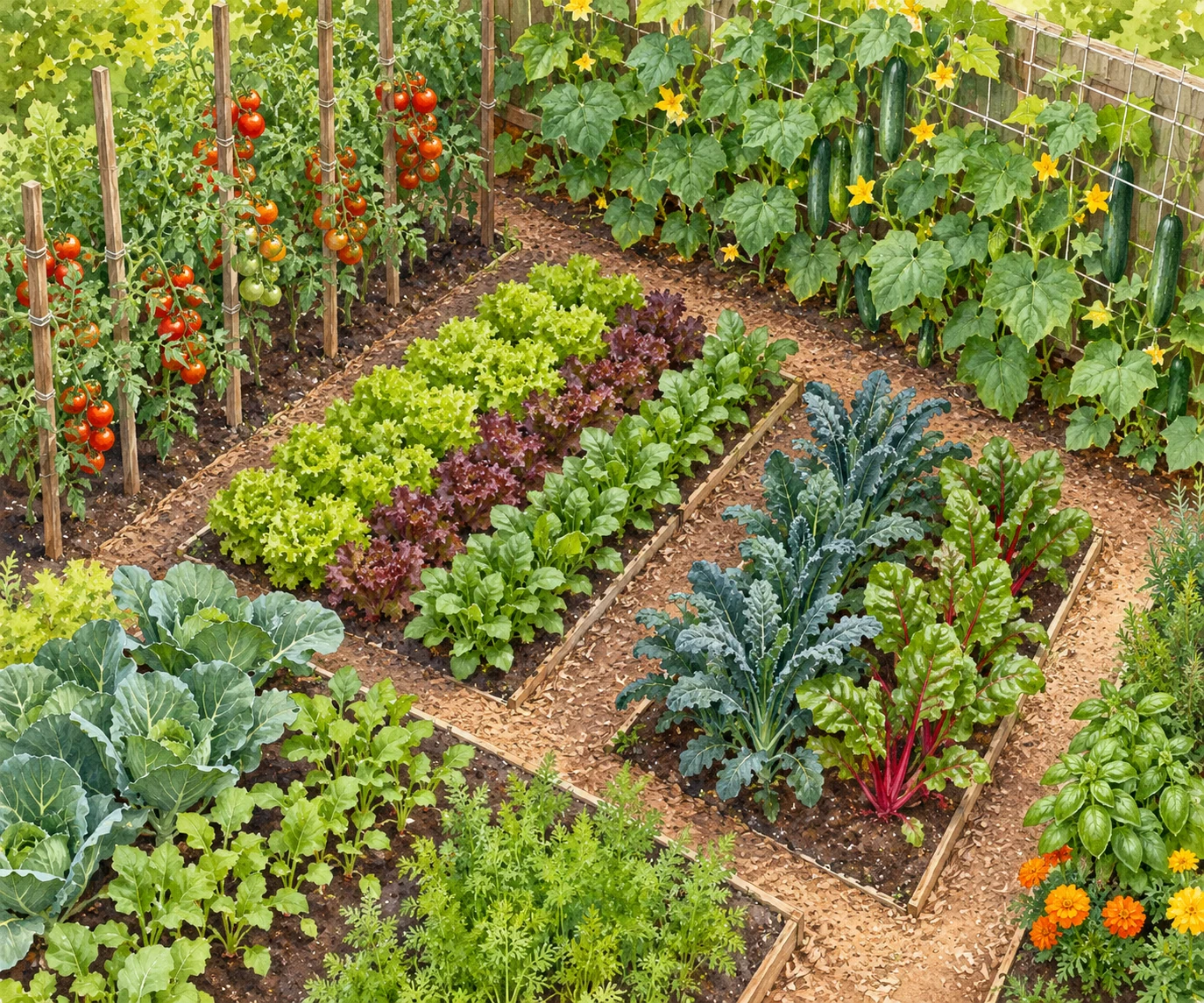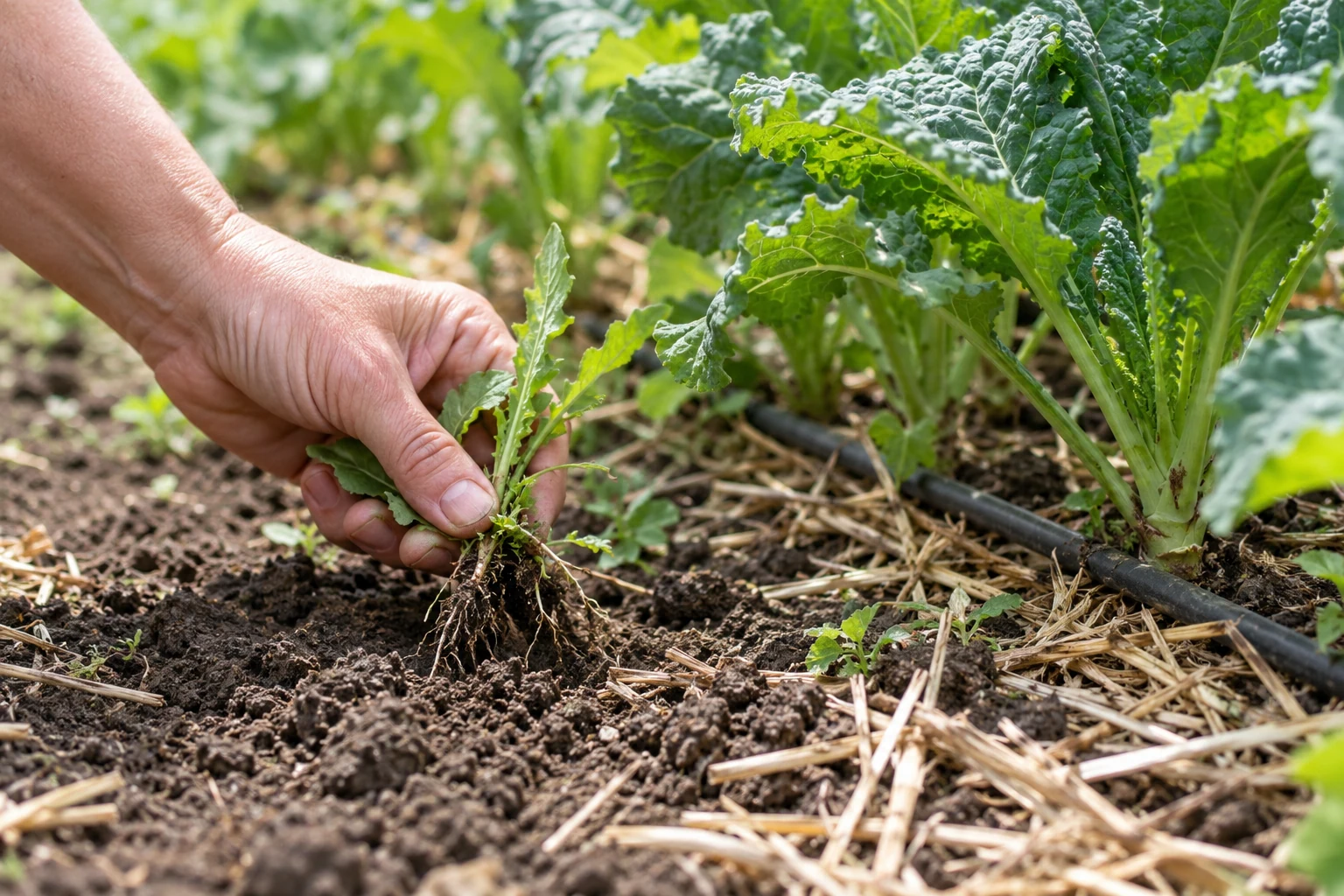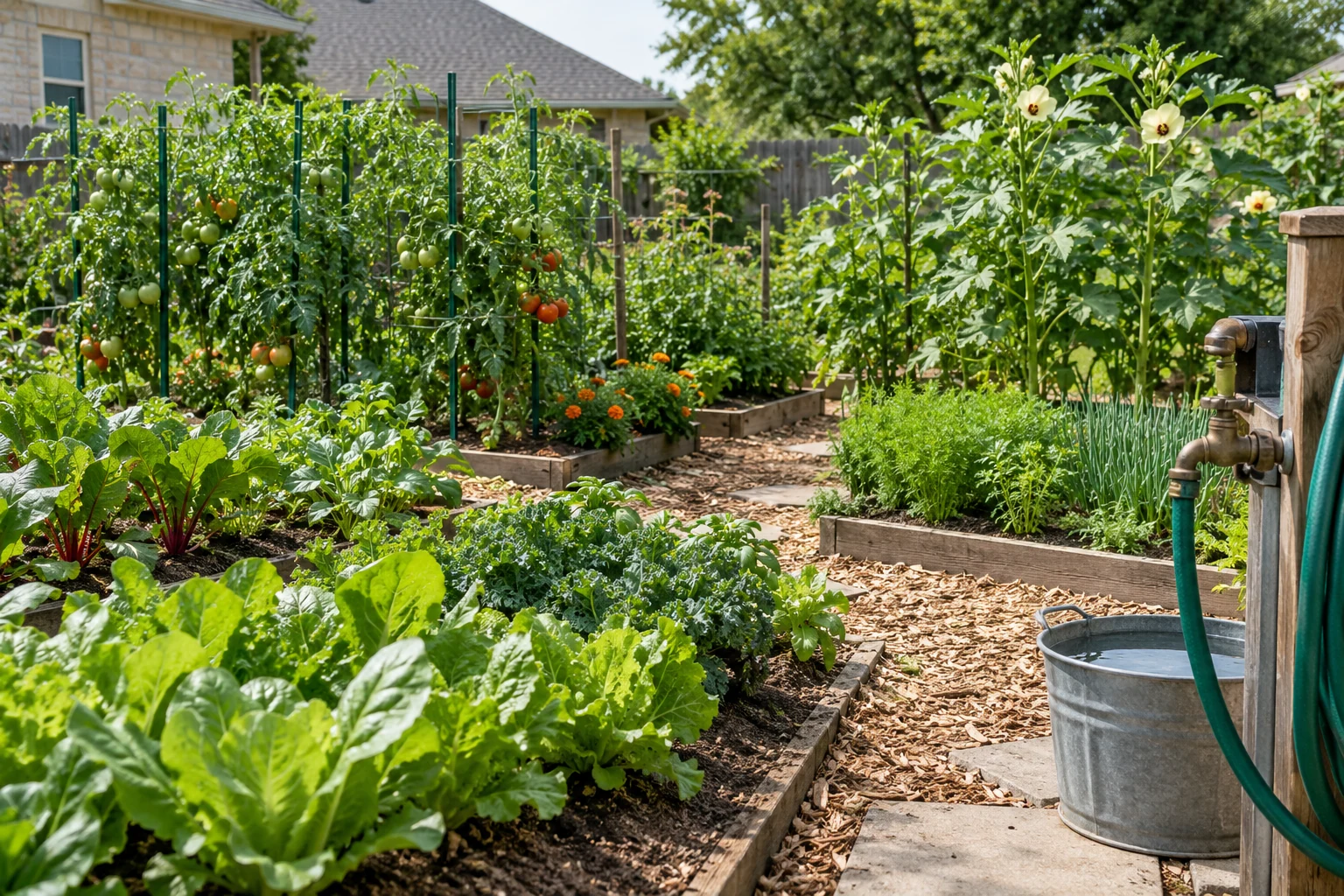
Texas home gardeners can grow vegetables throughout the year, but success begins with practical choices about location, crops, and care. A suitable site offers abundant sunlight, fertile soil that drains well, and convenient access to water, away from competing trees and shrubs. Choose vegetables your household enjoys and quantities you can use or preserve. Variety selection also matters: your county Extension agent can suggest locally adapted choices. Where sunlight is limited, leafy vegetables such as lettuce, mustard, and parsley are options. ## Turn your crop wish list into a workable layout Start with the space you actually have. Sketch the planting area, mark the water outlet, and note nearby trees or shrubs. Then compare your vegetable list with the site's light and available room. This turns a broad wish list into a planting plan tied to the garden's conditions. Give sprawling crops particular attention. Before including watermelons, cantaloupes, cucumbers, or winter squash, decide where their vines will go. A fence or trellis may reduce the space needed, but the layout still needs room for you to reach and care for plants. If you want to test an unfamiliar variety, assign it a small trial planting rather than committing a large share of the garden. Next, consider the garden at more than one moment in the season. Leave yourself a clear way to tend crops that stay in place while harvesting those that finish sooner. A useful plan accounts for both the vegetables you want and the work required to reach them. ## Arrange crops and prepare the ground Place tall crops, including okra, staked tomatoes, pole beans, and sweet corn, along the garden's north side to reduce shading of shorter vegetables. Group crops by maturity and replace finished crops with unrelated ones; rotation helps limit insect and disease buildup. Soil preparation should improve drainage and aeration. Organic matter can benefit both clay and sandy soils. Work soil only when a squeezed handful crumbles readily under gentle pressure, and aim for a granular texture. Use a soil test to guide fertilizer rates. Make the next planting part of the first plan. Beside each crop on your sketch, leave space to record what will replace it. The source offers early beans followed by beets, squash, or bell peppers as a rotation example. Use that example to think beyond simply refilling an empty row with the same vegetable. Before preparing the bed, check whether the soil is ready to handle. If a squeezed sample remains a firm ball instead of breaking apart easily, postpone cultivation. Once it is workable, break up coarse lumps without trying to make the soil powdery. When bringing in soil amendments, take care to avoid introducing pests; your county Extension office can advise about nematode testing. Treat fertilizing and planting as separate decisions within the same preparation process. Obtain soil-test recommendations, mix the recommended preplant fertilizer into the soil, and then prepare the planting bed. Choose seeds or transplants according to the crop. Transplants can bring an earlier harvest, while seeds need appropriate covering and moisture that avoids both crusting and overwatering. ## Keep care consistent through harvest Most vegetable gardens need roughly an inch of rain or irrigation weekly during growth, with water reaching at least six inches into the soil. Sandy ground generally needs watering more often than heavier soil. Morning sprinkler use allows foliage to dry before night; drip irrigation keeps water off leaves. Mulch helps conserve moisture and suppress weeds. Hoe shallowly to protect roots, and remove weeds while small. Inspect plants frequently, keep garden records, and harvest mature vegetables on the day you intend to eat or preserve them. Use these care tasks as a connected routine. When checking water needs, also look for emerging weeds and changes in leaves or plant growth. Keep the weekly water guideline in context: rainfall contributes to the total, and soil type affects how often irrigation is needed. The objective is to wet the soil adequately without excessive watering. During the same walk through the garden, check that weeds remain small enough to remove with shallow cultivation. Look for disease symptoms, and use county Extension identification resources when you need help understanding a problem. If a pesticide is needed, read its label and confirm that the intended vegetable crop is listed before applying it. Finish the routine with harvest and a brief record. Note what you planted, the care you provided, and when you harvested. Keep those notes alongside the layout so your next planting plan has a record to draw on. As crops mature, connect picking with meals or preservation rather than leaving harvest as a separate, occasional task.